
Last updated: October 2026
Quick answer: Figuring out what to wear to Oktoberfest as a woman, first time around, is easier than it looks: a dirndl is the classic choice (blouse, bodice, full skirt and apron) with flat, comfy shoes. Prefer to skip the dirndl? A pretty autumn outfit in a similar palette with practical layers works just as well.
If you are wondering what to wear to Oktoberfest, women first time visitors usually feel two things: excitement and mild panic about getting it wrong. Relax. Oktoberfest style is more forgiving than you think, and nobody expects a first-timer to look like a Bavarian local. This guide covers the classic dirndl, how to choose one, what to wear instead, and the practical details that make or break your day.
Oktoberfest is held every year in Munich, Germany, beginning in late September and running into early October, drawing millions of visitors to its famous beer tents, according to the festival’s official site, oktoberfest.de. Most guests dress up at least a little, which is half the fun.
What to Wear to Oktoberfest: A First-Timer’s Simple Formula
Quick answer: The simple formula is a dirndl-style outfit in autumn colours, flat shoes you can walk in, a small crossbody bag, and a warm layer for the evening. Comfort matters more than perfection, because you will be on your feet for hours.

Think of your Oktoberfest outfit in four layers, from the inside out:
- The base. A dirndl, or a dirndl-inspired outfit: blouse, fitted bodice or waistcoat, full skirt, and an apron.
- The shoes. Flat, closed-toe and already broken in. You will walk on gravel, grass and crowded tent floors.
- The extras. A small crossbody bag, simple jewellery, and maybe a floral hair accessory.
- The weather layer. A cardigan, shawl or jacket you can add when the sun drops.
Get these four right and you will look the part and feel great from the first pretzel to the last dance.
What Exactly Is a Dirndl, and How Does It Work?
Quick answer: A dirndl is the traditional Alpine dress with four parts: a white or cream blouse, a fitted bodice, a full skirt, and an apron tied at the waist. It grew from historic rural workwear into the festive outfit worn at Oktoberfest today.
A dirndl has four pieces, and each one does a job:
- The blouse. Usually white or cream, with short puffed or three-quarter sleeves. It sits under the bodice and keeps things modest and pretty.
- The bodice. The fitted top, often laced at the front. This is where most of the style lives: embroidery, colours and neckline shape.
- The skirt. Full and knee-length or longer. It should swish when you twirl, and it gives you room to sit comfortably on long benches.
- The apron. Tied over the skirt at the waist, usually in a contrasting colour or pattern. It completes the look.
Here is a charming tradition worth knowing: where you tie the apron bow carries meaning. Tied on the left, it traditionally signals you are single; on the right, taken; in the middle, that you are keeping it a mystery; and at the back, that you are widowed or working as staff. It is a fun detail, and locals do notice.
How Do You Pick a Dirndl That Fits and Flatters?
Quick answer: Choose a dirndl in colours that suit you, with a bodice that fits snugly without squeezing and a skirt that hits at or below the knee. Try it on with the blouse, sit down in it, and make sure you can breathe, eat and dance.
Shopping for your first dirndl is exciting, but a few fitting rules make all the difference:
- Fit the bodice first. It should feel snug and supportive, like a good corset top, but you must be able to breathe and sit. If it gapes or pinches, try another size.
- Pick a flattering length. Knee-length or just below is the classic, practical choice. Very short skirts read more costume than traditional.
- Choose colours you love. Deep greens, burgundy, navy and blush all look beautiful. Pick shades that flatter your skin tone rather than whatever is trendiest.
- Check the blouse. Make sure the neckline sits comfortably and the sleeves do not ride up. A well-fitting blouse changes the whole look.
- Move in it. Sit, stand, walk and do a little twirl in the fitting room. Oktoberfest days are long, and your outfit has to keep up.
In our experience, a mid-range dirndl in a timeless colour beats a cheap novelty one every time. It looks better, lasts longer and feels more special in photos.
What to Wear to Oktoberfest, Women First Time: Shoes, Bags and Layers
Quick answer: Wear flat, closed-toe shoes you have already broken in, a small crossbody bag that keeps your hands free, and a cardigan or shawl for the evening. These practical choices matter more than any accessory.
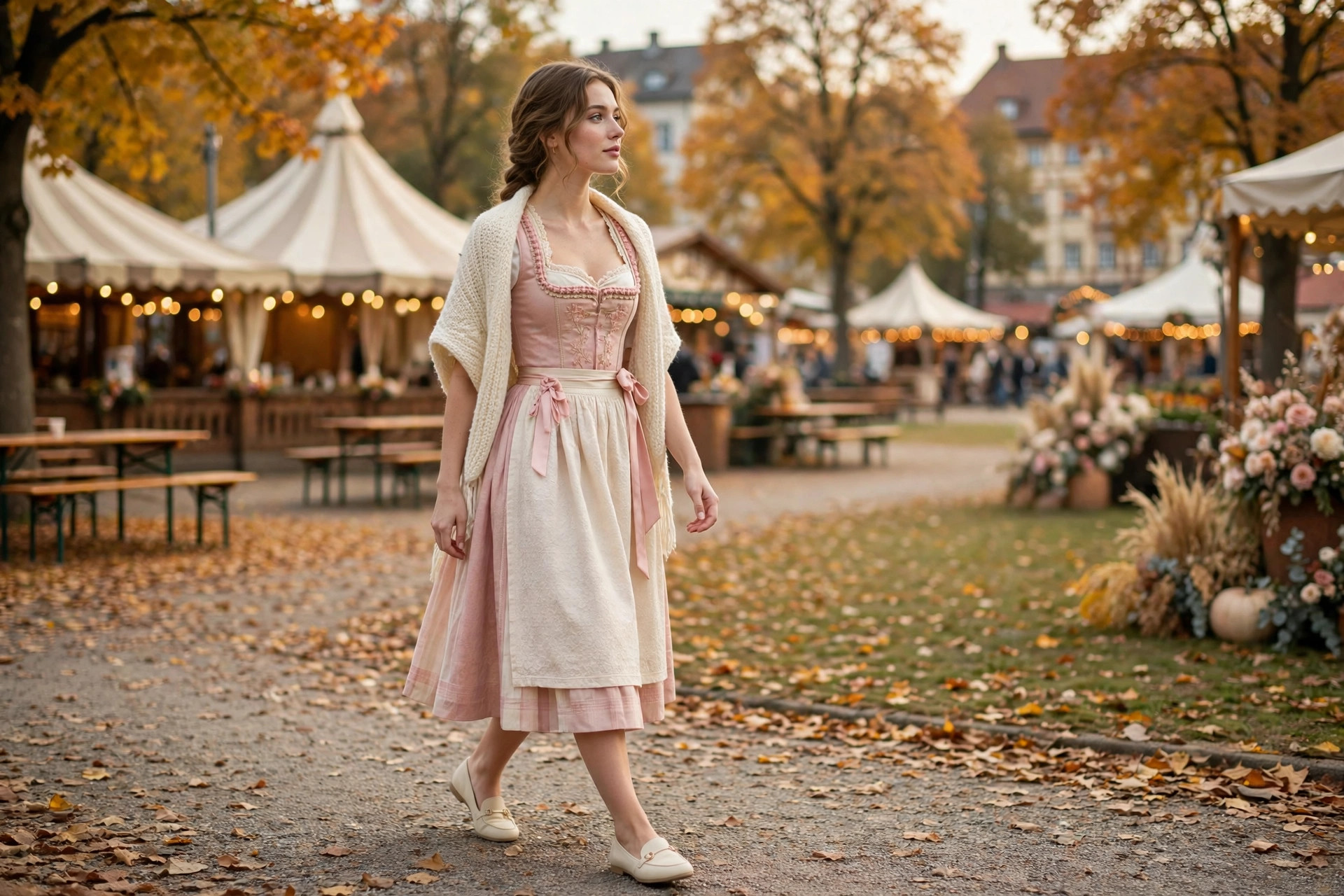
The details are where first-timers either shine or suffer. Get these right:
- Shoes. Flat loafers, ballet flats or low block heels with grip. The festival grounds mix gravel, grass and spilled drinks, so leave the stilettos at home. Break your shoes in before the trip.
- Bag. A small crossbody bag is ideal. It stays secure in crowds, keeps your hands free for food and drinks, and fits your phone, cash and lip balm.
- Evening layer. Temperatures drop fast after sunset in late September. A soft cardigan, pashmina or cropped jacket in a matching colour keeps you cosy without ruining the look.
- Hair. A simple plait, low bun or loose waves with a small floral clip looks festive and survives a long day. Avoid anything that needs constant fixing.
- Jewellery. Keep it simple: small earrings, a delicate necklace. You will be hugging friends and dancing, so skip anything fragile or fiddly.
Bring plasters for your feet even if your shoes feel fine at home. A full day of walking and dancing tests every pair of shoes.
What Can You Wear Instead of a Dirndl?
Quick answer: If you would rather not wear a dirndl, choose a pretty autumn outfit in a dirndl-like palette: a blouse or knit top, a full midi skirt, and boots. You will blend in beautifully without wearing traditional dress.
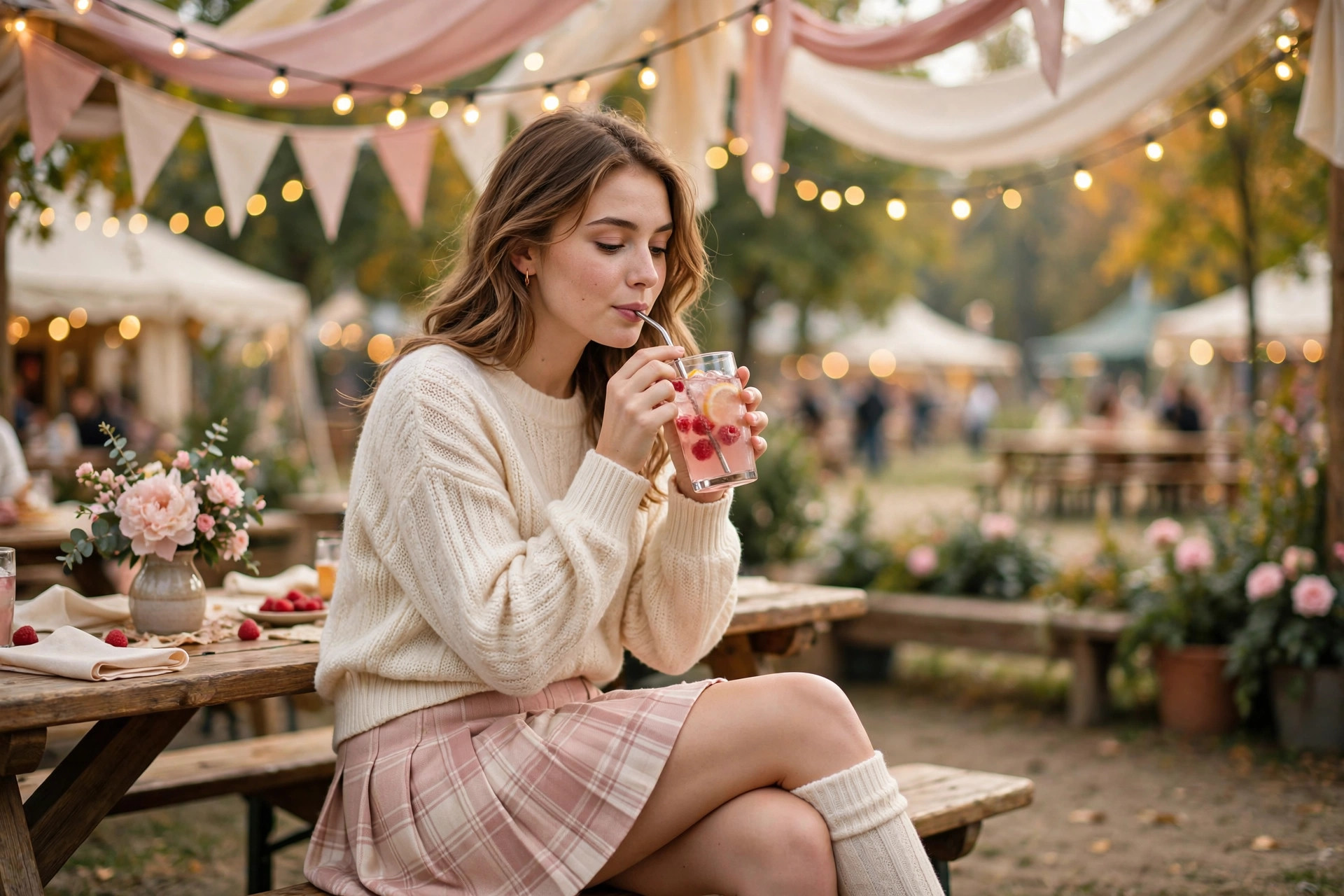
You absolutely do not have to wear a dirndl. Plenty of visitors go in lovely everyday outfits, and nobody minds. The trick is borrowing the dirndl’s spirit: feminine, autumnal and a little bit festive.
| Element | Classic dirndl look | Casual alternative |
|---|---|---|
| Top | Cream peasant blouse | Cream knit top or embroidered blouse |
| Bottom | Full dirndl skirt with apron | Full midi skirt in plaid or floral |
| Shoes | Flat loafers or Mary Janes | Ankle boots or comfy flats |
| Layer | Shawl or cropped cardigan | Oversized cardigan or denim jacket |
| Accessory | Floral hair wreath | Simple hair clip or ribbon |
Stick to the palette, creams, blush, burgundy, forest green, navy, and your outfit will feel right at home among the dirndls. Avoid anything too formal, too sporty or too beachy, and you are set.
How Do You Dress for Cold Evenings and Sudden Rain?
Quick answer: Late September in Munich can swing from warm afternoons to chilly, rainy evenings, so layer smartly: a cardigan or shawl, a compact umbrella, and tights under your skirt. Check the forecast the morning of your visit.

Munich weather in late September is famously unpredictable. One afternoon you are sunbathing on the grass, the next you are huddling under a tent awning. Plan for both:
- Tights are your friend. Opaque tights in black, cream or burgundy add real warmth under a dirndl skirt and look completely natural.
- Bring a real layer. A cardigan, shawl or light jacket that matches your outfit. Evenings cool down quickly once the sun sets.
- Pack a compact umbrella. Showers come and go. A small umbrella fits in your crossbody bag and saves your hairstyle.
- Choose shoes for wet ground. This is another reason flats with grip win. Wet grass and cobbles are no place for smooth soles.
- Check the forecast that morning. Munich forecasts are fairly reliable a day out, so adjust your layers before you leave.
If you get caught in a downpour, duck into a tent, order something warm and wait it out. Some of the best Oktoberfest memories start with rain.
Which Oktoberfest Outfit Mistakes Should First-Timers Avoid?
Quick answer: The biggest mistakes are new uncomfortable shoes, novelty fancy-dress dirndls, huge bags, and forgetting a warm layer. Aim for traditional-inspired and comfortable rather than costume-shop cute.
A few gentle warnings from people who learned the hard way:
- Do not wear brand-new shoes. Break them in at home first. Blisters on day one ruin the whole trip.
- Skip the cheap costume-shop dirndl. Flimsy polyester mini-dirndls read as fancy dress. A simple, well-made look always wins.
- Do not bring a big handbag. Large bags are a hassle in crowds and on benches. Small and crossbody is the way.
- Do not forget sun protection. Afternoons can be surprisingly sunny. Sunglasses and a little sunscreen are worth packing.
- Avoid all-white outfits. Between the beer, the food and the crowds, white does not survive Oktoberfest. Cream is fine; stark white is brave.
- Do not overdo the theme. One floral accessory is charming. Head-to-toe novelty prints are a lot.
Do I have to wear a dirndl to Oktoberfest?
No, not at all. A dirndl is the traditional and most popular choice, but plenty of women wear pretty autumn outfits instead. What matters is looking neat, festive and comfortable. Nobody will judge you for skipping the dirndl.
How long should a dirndl skirt be?
Knee-length or just below the knee is the classic choice and the most practical for sitting on benches, walking and dancing. Longer midi lengths also look elegant. Very short skirts tend to look more like fancy dress than traditional wear.
Can I wear heels to Oktoberfest?
You can, but low, sturdy heels with grip are the sensible limit, and flats are honestly the smarter choice. The grounds are uneven, the tents get crowded, and you will be on your feet for hours. Comfort wins every time.
What bag should I bring to the festival grounds?
A small crossbody bag is perfect. It keeps your belongings secure against your body, leaves your hands free, and fits the essentials: phone, cash or card, lip balm and plasters. Leave big totes and anything valuable at your hotel.
Your first Oktoberfest is going to be wonderful, and now your outfit is one less thing to worry about. Pick something comfortable, add a festive touch or two, and go enjoy every pretzel, parade and polka. Prost, gorgeous.
Leave a Reply