
Last updated: November 2026
Quick answer: For winter blush placement for round face beginners, smile softly, place blush on the apples of your cheeks, then blend upwards towards your temples in a soft diagonal, keeping colour light, lifted, and away from the nose and jawline.
Winter blush placement for round face beginners can feel confusing, especially when every tutorial seems made for a different face shape. A round face is lovely and soft, with full cheeks and a gentle jawline, and blush should lift it rather than widen it. The secret is placement and blending, not more product.
In winter, blush also warms up a pale complexion and brings life back to skin dulled by cold air. This guide shows you where to place colour, how to blend it, and which textures work best when skin is dry.
Where should blush go on a round face?
On a round face, blush works best higher and further out than you might expect. Instead of a round circle in the centre of the cheek, aim for the outer cheekbone and blend diagonally upwards towards the temple. This creates a gentle lift that lengthens the face visually.
Start with less product than you think you need. Tap your brush once, smile softly, and place colour where your cheek feels fullest, then sweep it back and up. The colour should fade as it travels, with no harsh edge where it stops.
Avoid placing blush close to your nose or low near your mouth. Colour in those spots pulls attention inwards and downwards, which makes the face look wider and shorter. Keeping colour lifted and outward is the whole trick.
How do I blend blush so it looks lifted, not wide?
Blending is what turns a stripe of colour into a natural flush. Use a fluffy brush and light, upward strokes, always moving towards your hairline rather than across the cheek. Work in thin layers, stepping back from the mirror between layers to check the effect.
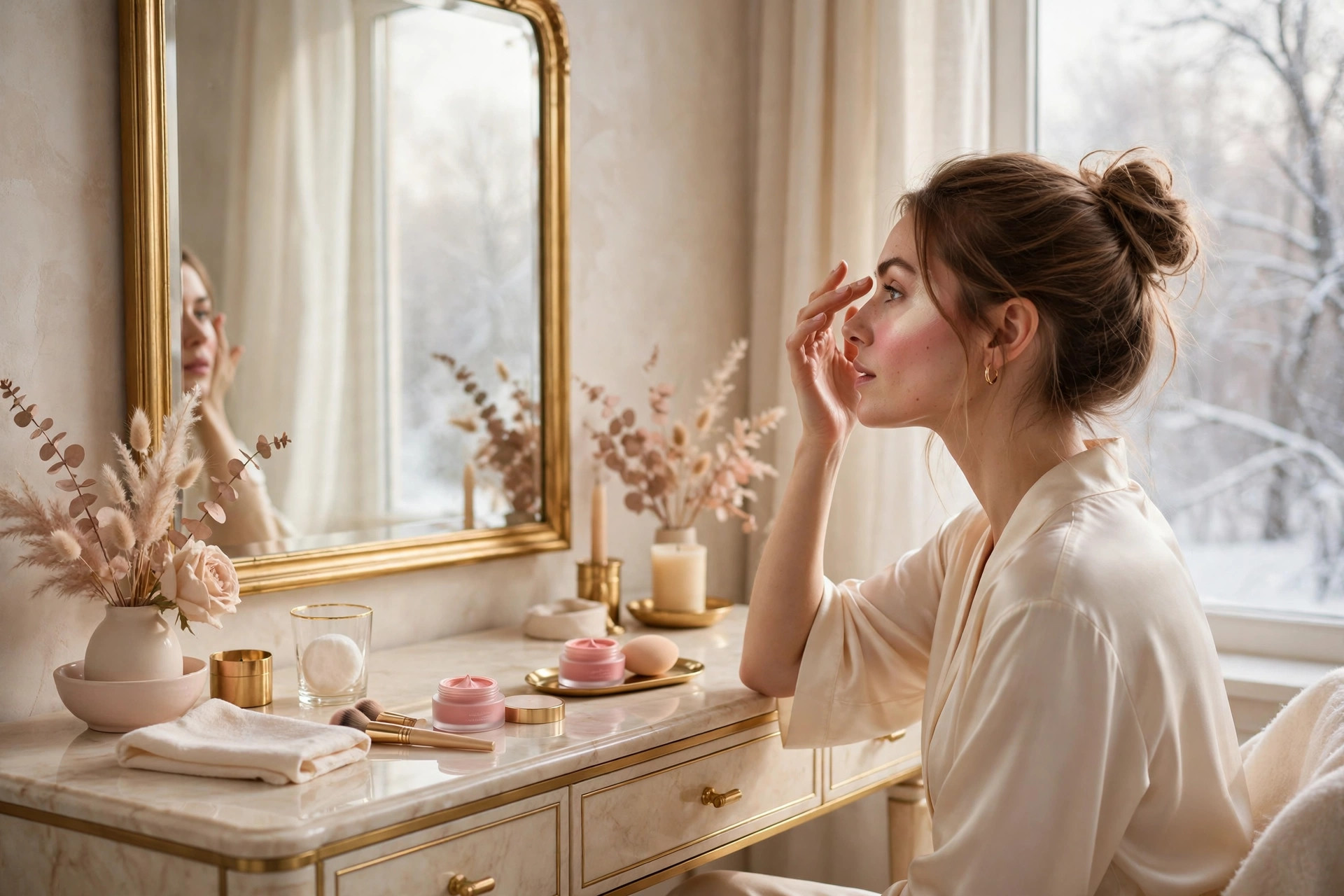
- Load the brush lightly and tap off extra powder before touching your face.
- Blend in small upward sweeps, never in circles on the apple of the cheek.
- Soften the lower edge first, so no line sits low on the cheek.
- Check both sides in daylight, and add a touch more only where one side looks paler.
If you accidentally apply too much, do not start again. Buff over the colour with a clean fluffy brush, or press a little translucent powder on top. Winter blush placement for round face beginners is forgiving once the blending direction is right.
Which blush texture works best in winter?
Winter skin is often drier, so texture matters as much as placement. Cream blush melts into skin and gives a soft, dewy finish that flatters full cheeks. Powder blush gives more control and lasts longer, but it can look dry if skin is not moisturised first.
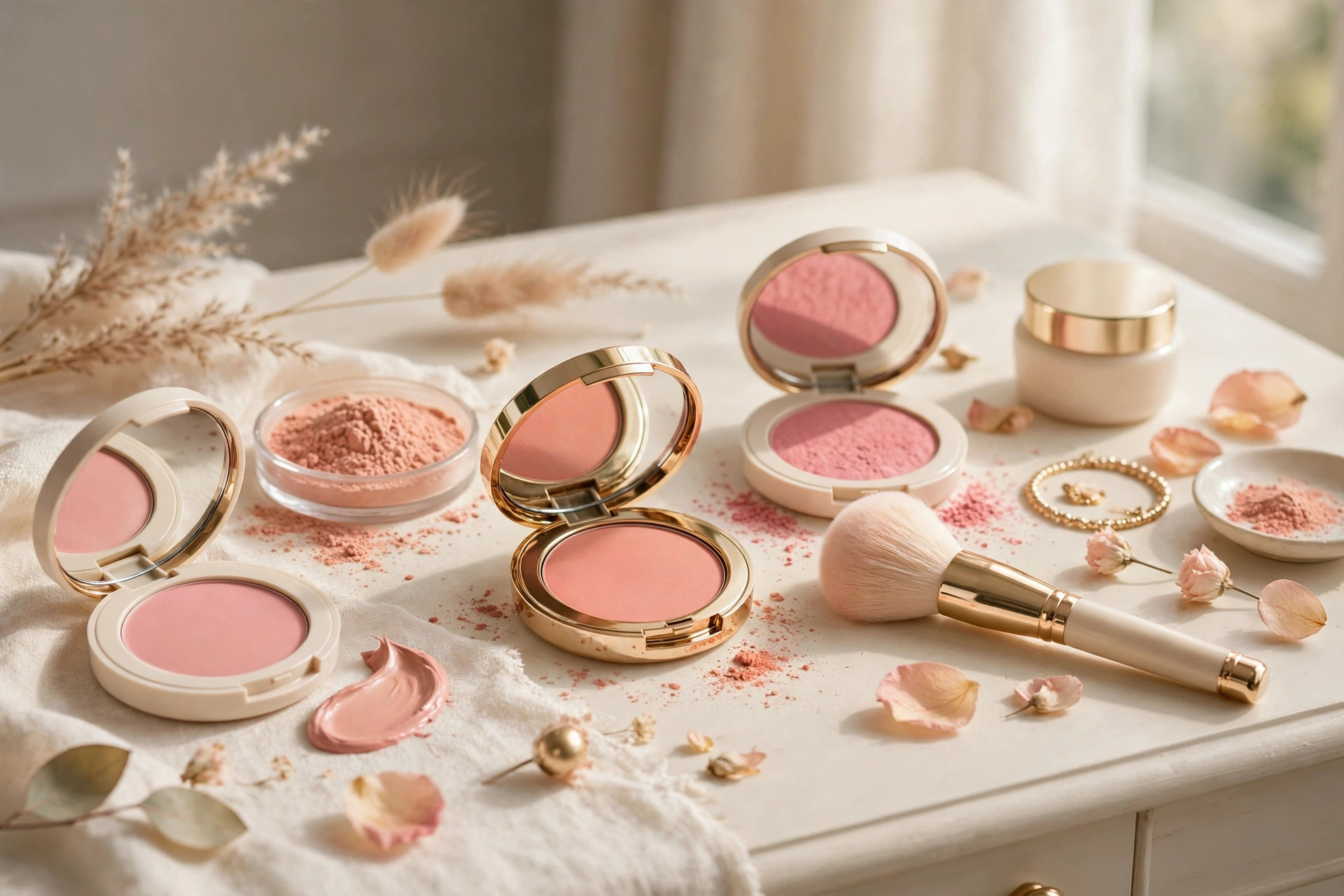
For beginners, cream blush applied with fingertips or a damp sponge is wonderfully forgiving. Warm a small amount between your fingers, press it onto the outer cheek, and blend upwards. The warmth of your fingers helps it melt in naturally.
| Texture | Winter feel | Best for beginners |
|---|---|---|
| Cream | Dewy, skin-like, forgiving | Yes, easy to blend with fingers |
| Powder | Long-lasting, matte finish | Yes, with a fluffy brush |
| Liquid | Sheer, buildable wash | With practice, a little goes far |
| Stick | Quick, portable colour | Yes, blend fast before it sets |
Whatever texture you choose, moisturise first and let your skincare settle for a minute. Blush grips better on hydrated skin and blends without patchiness.
What winter blush shades suit a round face?
Shade choice changes how lifted blush looks. Soft rose, warm peach, and muted berry shades flatter most skin tones in winter, because they mimic a natural flush rather than sitting on top of skin. Very bright or very cool shades can look harsh in soft winter light.

Fair skin suits soft pink and light peach. Medium skin glows with rose and warm apricot. Deeper skin looks beautiful with berry, plum, and warm terracotta tones. In each case, choose a shade one step softer than you expect, since winter light makes colour look stronger indoors.
Test blush on your cheek, not on your hand. Hand skin is a different colour, and a shade that looks perfect on your wrist can look too orange or too pink on your face. A quick cheek test in daylight saves many returns.
Winter also changes how shades behave. Cold cheeks are naturally pinker after a walk outside, so a shade that looks subtle indoors may look stronger once you come in from the cold. If you are choosing between two shades, pick the softer one, since you can always build it up, while toning down a shade that is too strong takes far more blending. Keep your winter blush in the same family as your lip colour too: a rose blush with a rose lip, or a peach blush with a warm nude lip, ties the whole face together without any extra effort.
How do I place blush with glasses or a scarf?
Winter accessories change how blush reads. Glasses frames sit across the cheekbone, so keep blush slightly lower than the frame and blend well, so colour does not bunch beneath the frame edge. A scarf can rub colour away, so set cream blush lightly with powder on cold days.
If you wear a high scarf or coat collar, place blush a touch higher than usual, so it stays visible above the fabric. This also keeps the lifted effect, since the eye follows colour upwards rather than towards the covered jawline.
For evenings, you can deepen the same placement slightly rather than moving it. Add a second thin layer in the same diagonal sweep, and the look stays lifted while gaining warmth for low light.
What mistakes make a round face look wider?
A few mistakes widen a round face, and all are easy to fix. Placing blush in a circle on the apple, blending horizontally towards the nose, or using shimmery blush all emphasise width. Shimmer catches light across the fullest cheek, which is the opposite of a lifting effect.
Heavy contour paired with heavy blush can also look muddy in winter light. If you contour, keep it soft and let blush do the warming work. The goal is a gentle, healthy flush, not a sculpted look.
Skincare also plays a part. The American Academy of Dermatology explains that winter air can dry skin, so a gentle moisturising routine helps make-up sit evenly. You can read their winter skin care guidance on the American Academy of Dermatology website. In our experience, blush always blends better on skin that was moisturised ten minutes before make-up, not seconds before.
How do I keep winter blush looking fresh all day?
Winter blush fades fastest where scarves rub and where skin gets cold and then warm again. Setting cream blush with a whisper of matching powder helps it last, and a midday touch-up takes only seconds if you keep blush in your bag.
- Blot shine gently with tissue before touching up, rather than layering over it.
- Press a small amount of cream blush onto the outer cheek with fingertips.
- Blend upwards with a clean finger or sponge, following the original diagonal.
- Step back and check both sides match before leaving the mirror.
For long days, a long-wearing cream formula under a light powder blush in the same shade gives the best staying power. The two layers lock together without looking heavy.
At the end of the day, remove blush gently with your usual cleanser and finish with moisturiser. Sleeping in make-up dries skin further and makes the next morning’s blending harder, so a calm evening cleanse is part of the routine, not an extra chore. Over a week or two, this gentle cycle of moisturise, place, blend, and remove keeps both your skin and your blush looking their best.
Should I smile when applying blush?
A soft smile helps you find the apples of your cheeks, but do not grin widely. A big smile lifts the apples too high, so blush ends up too low once your face relaxes. Smile gently, place the colour, then relax your face to blend.
Can I use bronzer and blush together on a round face?
Yes, if you keep them in different zones. Apply bronzer softly under the cheekbone and blush on and above it, blending upwards. The two should meet gently, never overlap into one muddy patch.
Is matte or shimmer blush better for a round face?
Matte or satin blush is usually more flattering, because it does not add width with shine. A tiny touch of highlighter on the top of the cheekbone can add glow, but keep shimmer away from the fullest part of the cheek.
How much blush is too much in winter?
If you can see a clear edge or a circle of colour, it is too much or under-blended. Step back from the mirror: blush should look like a flush from within, not like a shape on your cheek. When in doubt, blend more and add less.
Round faces photograph beautifully with lifted blush, because the colour follows the cheekbone instead of fighting it. Try the diagonal sweep this week, blend slowly, and enjoy how soft and awake your winter make-up looks.
Leave a Reply