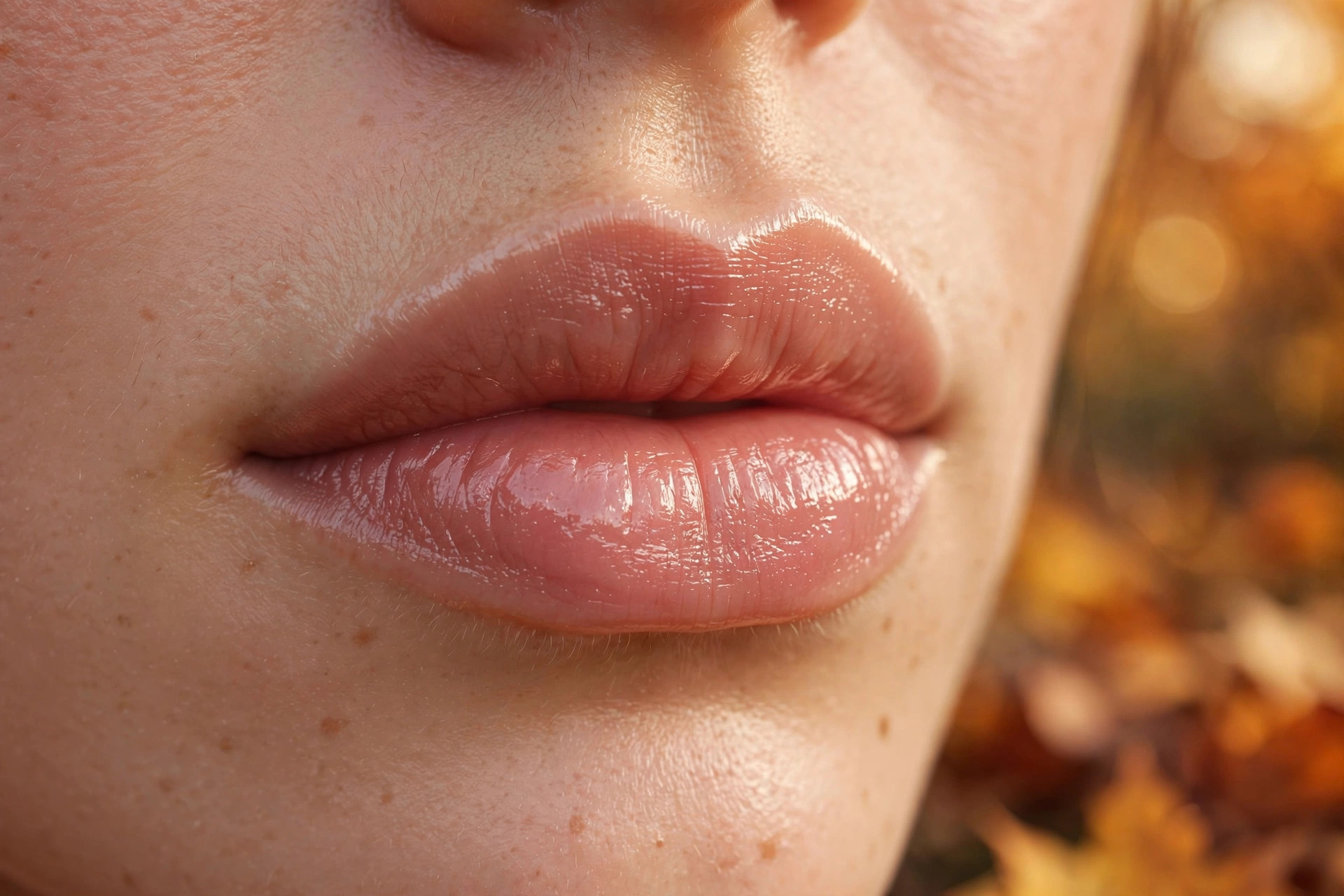
Every fall, the same thing happens: the air turns crisp, the heating goes on, and your lips turn into sandpaper. Dry, chapped lips are one of the most universal cold-weather complaints — and one of the most fixable. Most chapped lips are not a mystery and not a sign that anything is seriously wrong; they are simply what happens when thin, delicate lip skin meets cold wind, dry indoor air, and habits that make things worse.
The good news is that a proper lip routine takes about two minutes a day and genuinely works. This guide explains why lips chap in fall, the exact routine that fixes them, the ingredients that help and the ones to avoid, and when chapped lips are worth mentioning to a professional. No expensive treatments, no ten-step routines — just what works.
Why Lips Chap So Easily in Fall
Lips are structurally bad at handling dry weather. The skin on your lips is much thinner than the skin on the rest of your face, and unlike the rest of your skin, lips have no oil glands of their own. Everywhere else, your skin produces oils that form a protective barrier against moisture loss. Your lips cannot do this — they rely entirely on what you put on them.
Fall attacks lips from two directions at once. Outside, cold air holds less moisture than warm air, and wind strips away what little hydration the lip surface has. Inside, central heating drops indoor humidity dramatically — the warm, dry air of a heated home or office pulls moisture out of skin all day long. Lips, with no oil barrier of their own, feel this first and worst.
Add in the season’s habits — hot drinks, licking lips against the cold, matte lipsticks — and it is no wonder October is peak chapped-lip season. Understanding the causes matters because it tells you the fix is not just “more lip balm.” It is the right lip balm, applied the right way, plus a few habit changes.
The Habits Making It Worse
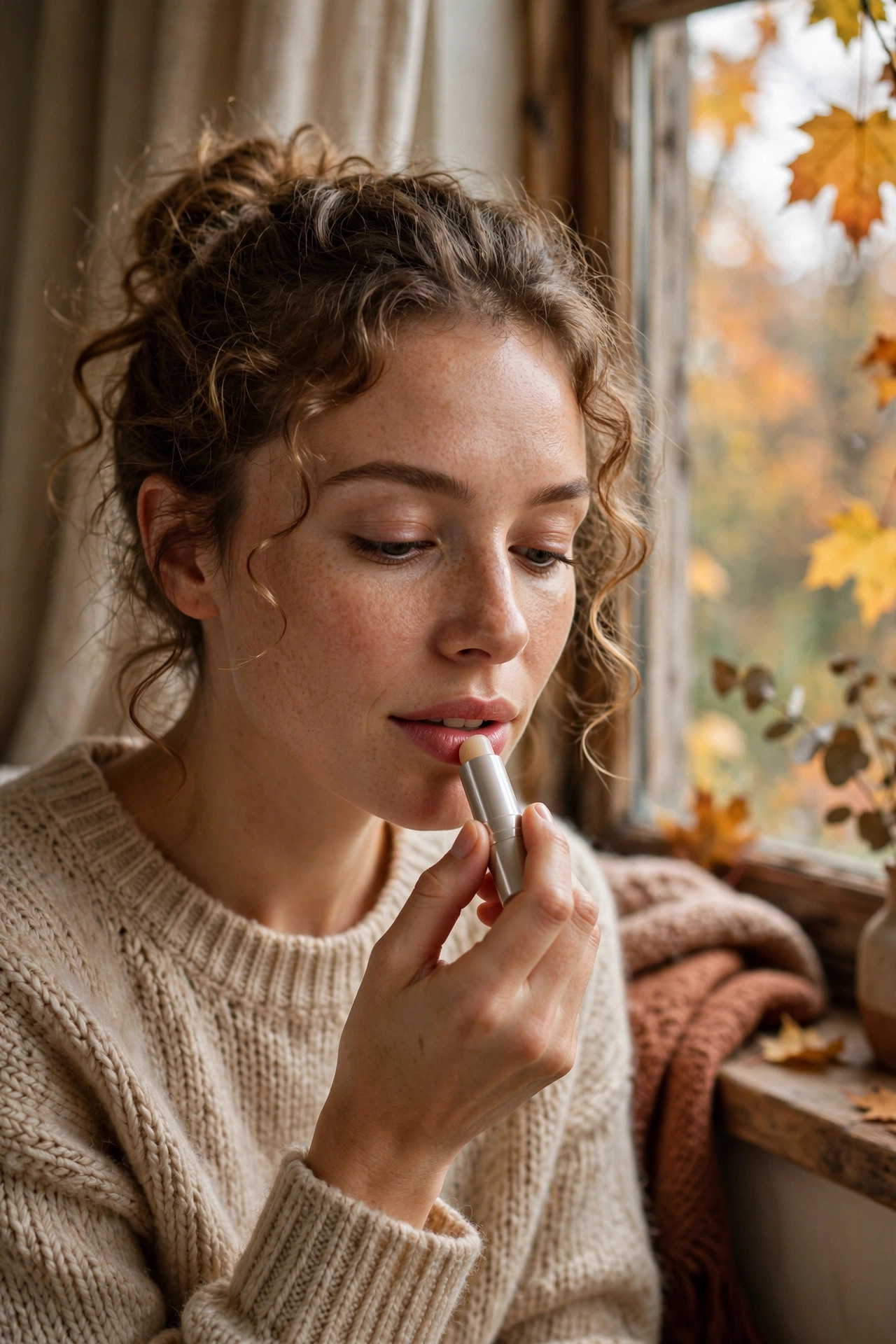
Before buying anything, check these habits. Most people with chronically chapped lips are doing at least two of them:
- Licking your lips. The number one culprit. Saliva feels moisturising for about ten seconds, then it evaporates — taking the lips’ own moisture with it. Saliva also contains digestive enzymes that irritate lip skin. Every lick makes the dryness worse, creating a cycle that is hard to break without realising it is happening.
- Breathing through your mouth. Common when noses get stuffy in fall. A constant stream of air over the lips dries them relentlessly, especially overnight.
- Picking and peeling flakes. Pulling off loose skin tears healthy skin underneath and can cause bleeding and cold sores to flare. It always makes things worse, never better.
- Matte long-wear lipsticks. The formulas designed to last eight hours do it by being extremely drying. Wearing them daily on already-dry lips is a recipe for cracking.
- Very hot drinks and spicy food. Heat and spice irritate compromised lip skin. Let drinks cool slightly, and give your lips a break from extra-spicy food while they heal.
- Not drinking enough water. Hydration from within will not fix chapped lips on its own, but dehydration makes everything worse. If your lips are dry and you are barely drinking water, that is contributing.
Breaking the lip-licking habit alone fixes a surprising number of cases. Keep balm within reach at all times — desk, bag, bedside, coat pocket — so that reaching for balm replaces reaching for your tongue.
The Two-Minute Routine That Fixes Chapped Lips
Healing chapped lips needs two things: gentle exfoliation to remove the dead, flaky layer, and serious moisture sealing to protect what is underneath. Here is the routine, morning and night:
- Exfoliate gently — but not daily. Two to three times a week, remove flakes with a soft, damp washcloth rubbed very gently over the lips, or a teaspoon of sugar mixed with a drop of honey massaged lightly and rinsed off. The key word is gently. If it hurts, you are pressing too hard. Never exfoliate lips that are cracked and bleeding — let them calm down first.
- Apply a hydrating layer. While lips are still slightly damp, apply something with humectant ingredients — hyaluronic acid lip serums or even a dab of your facial hyaluronic serum. Humectants draw moisture in.
- Seal it with an occlusive balm. This is the critical step most people skip. A humectant without a seal evaporates; an occlusive balm — one based on petrolatum, shea butter, lanolin, or beeswax — locks the moisture in. Apply generously.
- Repeat through the day. Reapply balm after eating, drinking, and whenever lips feel dry. Think of it as maintenance, not a one-time treatment.
- Do an overnight treatment. Before bed, apply a thick layer of balm or a dedicated lip sleeping mask. Night is when lips do their best healing — eight undisturbed hours under a protective layer works wonders. Most people see a real difference after two or three nights of this.
The layering order matters: hydrating ingredients first, sealing balm last. Balm alone on dry lips just sits there; balm over hydrated lips locks the hydration in. This is the single most useful thing to understand about lip care.
Ingredients That Help — and Ones to Avoid
Not all lip balms are equal, and some popular ones actively make chapping worse. Here is what to look for and what to skip:
Helpful ingredients: petrolatum (the most effective moisture sealer available, despite its unglamorous reputation), shea butter, lanolin (excellent for very dry lips, unless you have a wool allergy), ceramides, squalane, beeswax, and hyaluronic acid in serums worn under balm. Plain petroleum jelly is one of the best and cheapest lip treatments in existence — do not let fancy packaging convince you otherwise.
Ingredients to avoid while lips are chapped: menthol, camphor, and eucalyptus — the tingly “medicated” feeling is actually irritation, and it dries lips further. Phenol and salicylic acid in high amounts can over-exfoliate. Added fragrance and flavouring (that delicious mint or cherry scent) are common irritants on compromised skin. And be wary of balms that make you reapply constantly — if a balm feels amazing for twenty minutes and then your lips feel worse than before, it is probably the problem, not the solution.
A simple test: the best lip balm for chapped lips usually has a short ingredient list and no tingle, no scent, and no shimmer. Boring is good here.
Eating and Drinking for Happier Lips
Lip balm handles the outside; habits handle the inside. None of these replace a good balm, but they all help:
- Drink water steadily. You do not need gallons — just consistent intake through the day. Herbal teas count. If you want to make hydration more enjoyable, our article on glowing skin drinks has tasty options that benefit your skin as well as your lips.
- Eat your healthy fats. Omega-rich foods — salmon, walnuts, flaxseed, avocado — support the skin’s barrier function from within. Fall is a great season for these foods anyway.
- Go easy on salty snacks. Excess salt around the mouth area draws moisture out of lip skin. If you notice lips get worse after salty foods, that is why.
- Consider a humidifier. This is the single most effective environmental fix. Running a humidifier in the bedroom while you sleep counteracts the drying effect of indoor heating, and your lips — and your skin generally — will notice within days. If your whole body feels dry and tight in fall, our body skin care routine for dry fall skin covers the full-body version of this battle.
- Protect lips outdoors. Wind and cold are direct causes. A scarf pulled up over the lower face on windy days is genuinely effective, and a balm with SPF matters even in fall — the sun still damages lips in October, and lip skin burns easily because it has very little melanin.
What About Lip Scrubs, Masks, and Treatments?
The lip care aisle has exploded, and most of it is optional. Here is an honest assessment:
- Lip scrubs: useful but not essential. A damp washcloth does the same job for free. If you enjoy the ritual, use one once or twice a week — no more.
- Lip sleeping masks: genuinely useful. They are just thicker, richer balms marketed for night use, and the overnight treatment step works with any thick balm. Worth buying if you like them; not mandatory.
- Lip oils: feel lovely and look glossy, but most are not occlusive enough to heal truly chapped lips on their own. Use them over balm for shine, not instead of balm for healing.
- Plumping products: skip these while lips are chapped. Plumpers work by irritating the lips, which is the opposite of what damaged lips need.
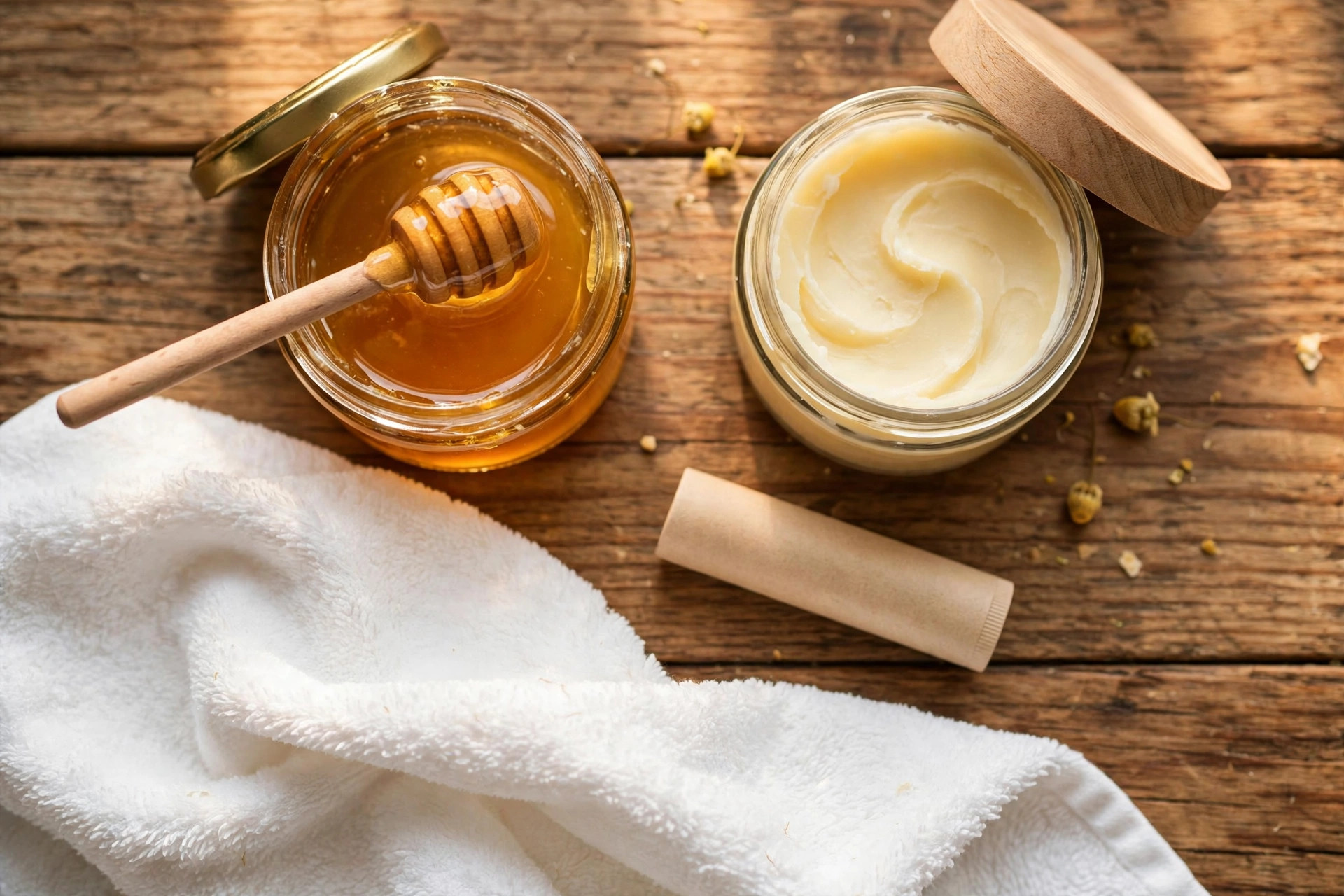
- Overnight natural options: a thin layer of honey (a natural humectant) under balm, or pure shea butter, both work well and cost very little.
You do not need a ten-product lip wardrobe. One good plain balm, used correctly and consistently, outperforms a shelf of fancy treatments used sporadically.
When to See a Professional
Most chapped lips respond to the routine above within a week. But some lip problems need professional attention rather than more balm:
- Cracks at the corners of the mouth that do not heal can be angular cheilitis, which sometimes needs antifungal or antibacterial treatment — worth mentioning to a pharmacist or doctor.
- Lips that stay severely chapped despite proper care for two to three weeks may indicate an allergy (often to a lip product ingredient, toothpaste, or even a food) or a nutritional deficiency. A dermatologist can help identify the cause.
- Swelling, blistering, or spreading rash around the lips is not ordinary chapping — get it checked rather than treating it yourself.
- A sore on the lip that does not heal within a few weeks should always be looked at by a doctor. This is rare, but it is the one lip symptom you should never ignore.
There is no shame in getting help for something as small as lip trouble. Professionals see this constantly, especially in fall and winter, and the fix is often simpler than you expect.
Wearing Lipstick on Dry Lips
You do not have to give up lip colour while your lips heal — you just need to prep properly. Exfoliate gently, apply the hydrating layer and balm, let it sink in for five minutes, then blot off the excess before applying lipstick. Choose creamy, satin, or glossy formulas over matte long-wear ones while lips are recovering. Tinted lip balms are the ideal middle ground: colour plus treatment in one step.
And remove lipstick gently at night — no scrubbing. Soak a cotton pad with micellar water or cleansing oil, hold it on the lips for a few seconds, then wipe softly. Follow with your overnight balm layer, and your lips get their healing hours.
The Bottom Line
Chapped lips in fall are not a personal failing and not a mystery — they are thin skin meeting dry air without protection. Break the lip-licking habit, exfoliate gently twice a week, layer hydration under a proper sealing balm, run a humidifier at night, and give it a week. For most people, that is the entire fix, and it costs less than a fancy coffee. Your lips will thank you every time you step out into that crisp October air.
Leave a Reply