
Last updated: October 2026
Quick answer: A good fall body routine has five parts: exfoliate gently two to three times a week, take short lukewarm showers, apply a rich moisturiser to damp skin within three minutes, give extra care to hands, feet, elbows and lips, and layer products when skin is very dry.
Every fall, the same thing happens. The air turns crisp, the jumpers come out, and suddenly your skin feels tight, itchy and rough. Most of us rush to fix our face — but your legs, arms, hands and feet need a fall routine just as much.
The good news is that a body routine does not have to be complicated or expensive. With a few small changes to how you shower, exfoliate and moisturise, you can keep your whole body soft and comfortable all through autumn and into winter. This guide walks you through everything, step by step, in plain and simple language.
Why Does Fall Dry Out Your Body Skin So Badly?
Quick answer: Cold autumn air holds less moisture than warm summer air, so it draws out your skin’s moisture. Hot showers, wool fabrics, and indoor heating strip away even more. The result — tight skin, itchy shins, cracked knuckles — is a normal seasonal reaction, not a warning sign.
To fix dry skin, it helps to understand why it happens. In summer, the air holds a lot of moisture, and that moisture helps keep your skin hydrated. In fall, the air gets colder and drier. Cold air cannot hold as much water, so it pulls moisture out of your skin instead.
Then we make it worse without meaning to. When the weather turns cold, we take longer, hotter showers because they feel so good. But hot water strips the natural oils from your skin — the very oils that keep moisture locked in. We also start wearing heavier fabrics like wool, which can rub against dry skin and make it itch. And indoor heating dries the air inside your home too, so your skin never really gets a break.
The result is familiar: tight skin after a shower, white flakes on dark trousers, itchy shins at night, cracked knuckles and rough heels. None of this means something is wrong with you. It is simply what dry fall air does to skin — and the fix is simpler than you think.
How Should You Exfoliate Dry Skin in Fall?
Quick answer: Dead skin blocks moisturiser from sinking in, so gentle exfoliation two to three times a week helps everything else work better. Beginners do best with a simple sugar scrub or a soft exfoliating glove used with light pressure. More often can damage skin and make dryness worse.
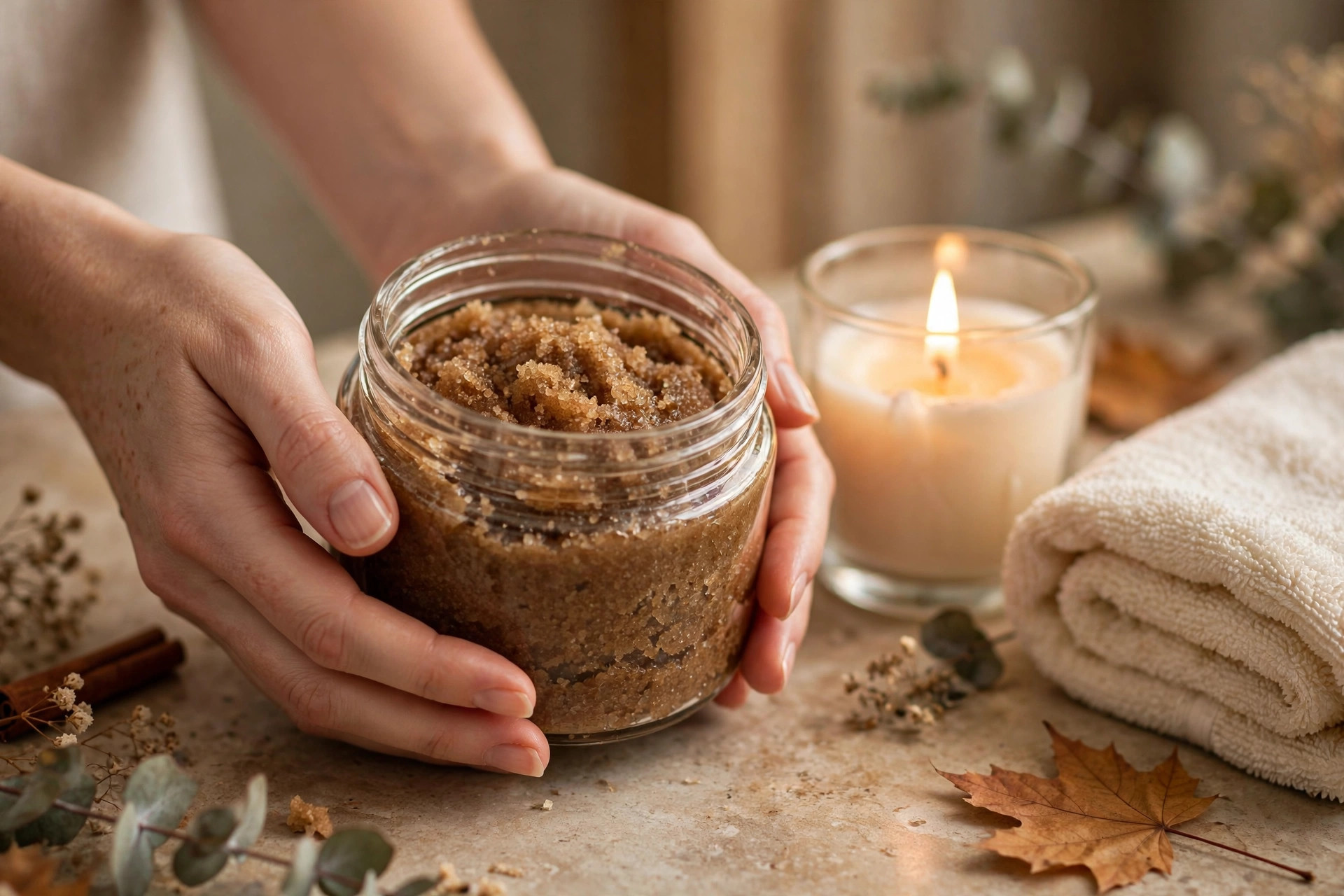
Think of dead skin cells like a layer of dust on a table. If you keep polishing over the dust, nothing really shines. Moisturiser works the same way: if your skin is covered in dry, dead cells, your lotion just sits on top instead of sinking in. Gentle exfoliation removes that layer so your moisturiser can actually do its job.
You have two choices:
| Type | What it is | Best for |
|---|---|---|
| Physical exfoliants | Scrubs with small grains (sugar or salt), soft body brushes, exfoliating gloves | Beginners; rough spots like elbows, knees and heels |
| Chemical exfoliants | Lotions or washes with gentle acids that dissolve dead skin without scrubbing | Sensitive skin; even exfoliation with no friction |
For beginners, a simple sugar scrub used two or three times a week is perfect. In the shower, massage it gently over damp skin in small circles, focusing on rough spots like elbows, knees and heels, then rinse it off. That is all there is to it. If your skin is sensitive or easily irritated, choose a gentle exfoliating glove instead of a scrub, and use very light pressure.
One important warning: do not overdo it. Exfoliating every day will damage your skin and make dryness worse. Two to three times a week is the sweet spot. If your skin ever feels raw or stingy, or looks red after exfoliating, take a break for a few days and be gentler next time.
What Is the Smartest Way to Shower for Dry Skin?
Quick answer: Your shower habits matter more than any product you buy. Use warm — not hot — water, keep showers to about ten minutes, and soap only areas that truly need it. Pat skin dry instead of rubbing, and leave it slightly damp so moisturiser locks the water in.
- Turn down the heat. Hot showers feel wonderful on a cold morning, but they are one of the biggest causes of dry body skin. You do not need an ice-cold shower — just aim for warm, not steaming. If the mirror is completely fogged and your skin looks red when you step out, the water was too hot.
- Keep it shorter. Ten minutes is plenty. Long showers give hot water more time to strip your skin’s natural oils.
- Be gentle with soap. You do not need to soap your entire body every day. Focus soap on the areas that truly need it: underarms, feet and private areas. For the rest of your body, warm water is enough most days. When you do use body wash, choose a creamy, fragrance-free or lightly fragranced formula instead of a harsh bar soap or a heavily perfumed gel. Creamy washes clean without leaving your skin squeaky — and squeaky is actually a bad sign. It means the wash removed too much of your natural oil.
- Pat dry instead of rubbing. When you step out of the shower, gently pat your skin with a soft towel and leave it slightly damp. This brings us to the most important step of all.
The American Academy of Dermatology gives the same advice in its dry-skin guidance: keep showers short and lukewarm, and choose gentle, fragrance-free cleansers, since harsh, heavily fragranced soaps strip the natural oils your skin needs. (AAD: Dermatologists’ Tips to Relieve Dry Skin)
Why Does Moisturiser Work Best on Damp Skin?
Quick answer: Moisturiser applied to slightly damp skin works far better than on dry skin, because it traps water before it evaporates. Apply a rich cream within three minutes of showering, be generous — especially on legs and arms — and reapply during the day if skin feels tight.
This is the golden rule of body skin care, and it makes the biggest difference. Apply your moisturiser within three minutes of stepping out of the shower, while your skin is still slightly damp. Damp skin absorbs moisturiser far better than dry skin, and the lotion helps trap that water in your skin before it evaporates. Dermatologists back this up: the AAD recommends applying moisturiser to damp skin for exactly this reason. (AAD: Dermatologists’ Tips to Relieve Dry Skin)
What should you use? In fall and winter, light summer lotions usually are not enough. Look for body creams instead of lotions — creams are thicker and richer, and they protect your skin for much longer. Good ingredients to look for include shea butter, ceramides, glycerin and hyaluronic acid. You do not need the most expensive brand; many affordable high-street body creams work beautifully.
How much should you use? More than you think. A thin, stingy layer will not protect dry fall skin. Be generous, especially on your legs and arms. Massage the cream in with upward strokes, and give it a minute or two to sink in before you get dressed.
If your skin is still dry by midday, there is no rule against moisturising twice. Keep a tube of body cream or hand cream at your desk or in your bag for touch-ups. Your skin will thank you.
Which Parts of Your Body Need Extra Care in Fall?
Quick answer: Hands, feet, elbows, knees and lips dry out faster than elsewhere and deserve targeted care. Rich hand cream after every wash, thick cream under socks at night, heavier balms on elbows and knees, and simple lip balm through the day keep every trouble spot comfortable.
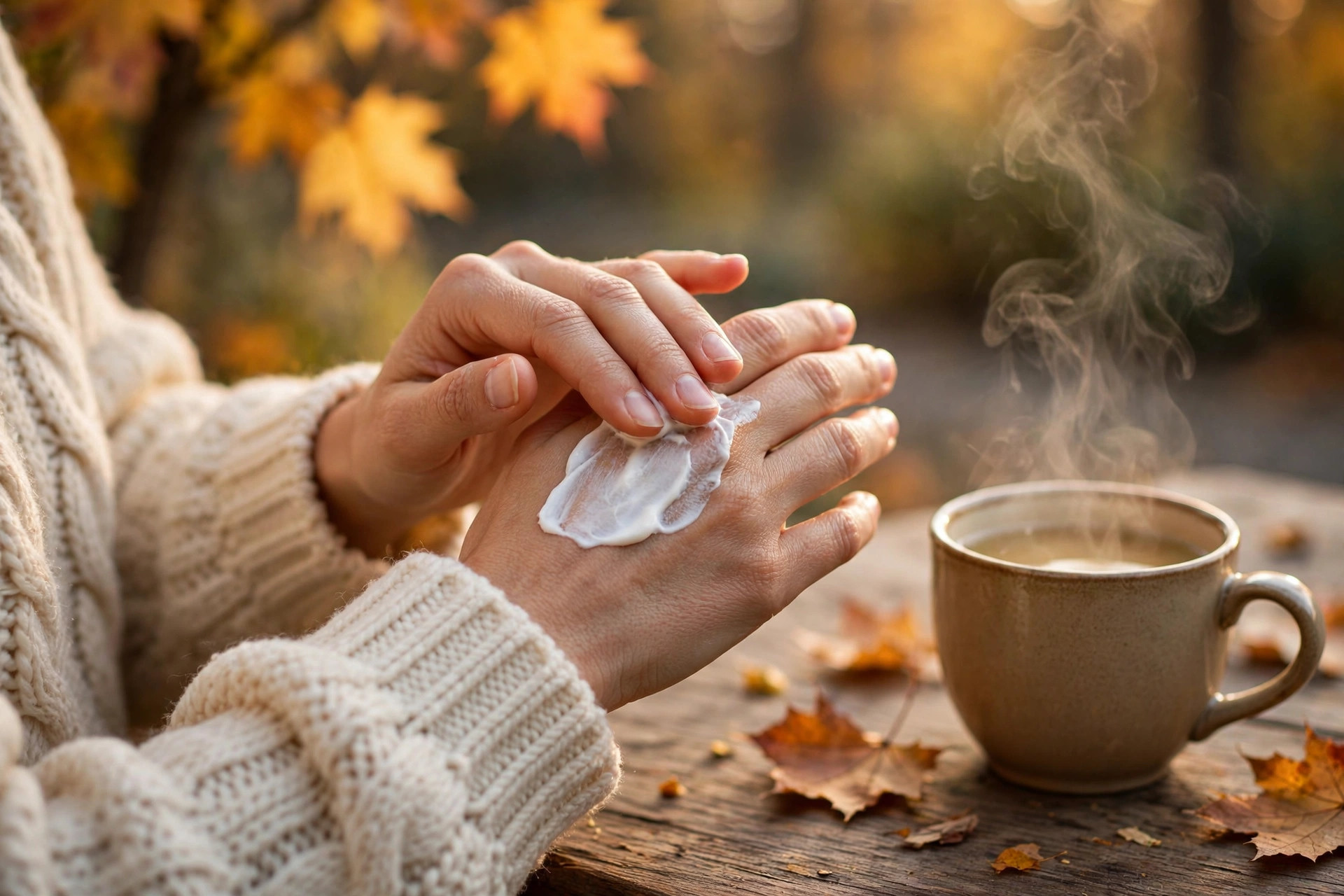
Some parts of your body dry out faster than others. Here is what each one needs:
| Trouble spot | Why it suffers | What helps |
|---|---|---|
| Hands | Cold air, frequent hand washing and sanitiser strip moisture fast | Rich hand cream by every sink and in your bag, applied after every wash; the glove trick at night (thick cream, then soft cotton gloves) |
| Feet | Forgotten inside socks and boots; dry heels can crack and hurt | Thick cream a few nights a week, then cosy socks over the top; gentle attention with a foot file or pumice stone on exfoliation days |
| Elbows and knees | Thicker skin that roughens easily | A dab of body oil or a thick balm over your regular moisturiser |
| Lips | No oil glands, so they chap fast | Simple lip balm, reapplied often; skip flavoured or tingly balms on already-cracked lips |
What Is the “Sandwich Method” for Very Dry Skin?
Quick answer: When one product is not enough, layer moisture the way you layer clothes: cream on damp skin after showering, then a sealing layer of body oil or balm once it sinks in. The oil adds no water itself — it locks the moisture from beneath in place.
If your skin is very dry, one product might not be enough. Just like you layer clothes in fall, you can layer moisture on your skin. This is called the sandwich method, and it is simple:
- Apply your cream to damp skin right after the shower, as usual.
- Let it sink in for a minute or two.
- Add a sealing layer — a few drops of a simple body oil, such as jojoba or sweet almond oil, massaged over the cream, or a thicker balm on the driest spots.
Oil on its own does not add water to your skin, but it seals in the moisture from the layer underneath — like putting a lid on a pot. If you like keeping things simple and affordable, plain petroleum jelly is a brilliant sealing layer: Harvard Health counts it among the most effective moisturisers for dry skin, because it forms a seal that keeps moisture in. (Harvard Health: 9 Ways to Banish Dry Skin)
This layering idea is not only for skin. If you enjoy building soft, cosy layers of scent too, our guide to fragrance layering for fall shows how to pair scented body products so everything works together instead of clashing.
What Does a Simple Weekly Body-Care Ritual Look Like?
Quick answer: One cosy evening a week covers everything: a warm shower with gentle exfoliation, rich cream within three minutes, then the extras — socks over foot cream, the glove trick for hands, lip balm. Make it feel like a treat, and the other six days need only the basics.
Routines are easier to keep when they feel like a treat instead of a chore. Here is a simple weekly ritual that covers everything, and it takes less than thirty minutes:
- Pick one evening a week. Sunday evening works well for many people, but any night is fine.
- Take a warm, not hot, shower. Exfoliate gently with your scrub or glove, giving extra attention to heels, knees and elbows.
- Pat dry and moisturise within three minutes. Use your richest body cream, and be generous.
- Do the extras. Apply the thick cream and socks on your feet, the glove trick on your hands if they need it, and lip balm.
- Make it cosy. Light a candle, put on soft music or a show, and give yourself this time. Self care works best when it feels kind, not rushed. If you ever feel like rest itself is the real luxury, you will love our do-less self-care reset, which is all about letting rest be enough.
On the other six days, you only need the basics: a smart shower and moisturiser within three minutes. That is the whole daily routine. Simple really is enough.
What Mistakes Make Dry Fall Skin Worse?
Quick answer: Good routines get undone by small habits: scorching showers, harsh fragranced soaps, skipping moisturiser in a hurry, forgetting sunscreen on exposed skin, and not drinking enough water. Fix these five and your routine has a real chance — keep them and even the best cream will struggle.
Even with a good routine, a few common habits can undo your progress. Watch out for these:
- Scorching hot showers and baths. Warm is fine, steaming hot is not.
- Harsh, heavily fragranced soaps. If your skin feels tight and squeaky after washing, your cleanser is too strong.
- Skipping moisturiser because you are in a hurry. Those three minutes after the shower matter more than any product.
- Forgetting sunscreen on exposed skin. Fall sun still reaches your face, neck and hands. Dry skin plus sun damage is a bad combination.
- Not drinking enough water. Moisturiser works from the outside, but your skin also needs water from the inside. Keep a water bottle nearby through the day.
And remember, your face has its own needs in fall too. If your cheeks and forehead are feeling tight and sensitive, our skin barrier repair routine for fall is made exactly for that. Face and body together, and you are fully covered for the season.
The Bottom Line
Quick answer: Dry fall skin is simply what happens when warm, hydrated summer skin meets cold, dry autumn air — not a personal failing. Exfoliate gently, shower smarter, moisturise damp skin within three minutes, and start tonight: your skin can feel noticeably different by morning.
Start tonight. Take a warm shower, pat dry, and reach for the richest cream you own. Your skin will feel the difference by morning, and by the end of the week, you will wonder why you ever dreaded fall skin season at all.
Leave a Reply