Last updated: October 2026
Quick answer: Wash liquid brushes like foundation and concealer weekly, powder brushes every two to three weeks, and sponges after every one or two uses. Clean bristles with gentle soap and lukewarm water, rinse bristles-down until the water runs clear, and always dry brushes flat — never upright in a cup.
Be honest: when did you last wash your makeup brushes? If you’re squinting at the ceiling trying to remember, you’re not alone — but your skin knows. Dirty brushes are one of the most common hidden causes of breakouts, and they quietly sabotage your makeup too. Product builds up in the bristles, colours mix into a muddy mess, and application gets streaky no matter how good your technique is.
The good news: washing brushes is easy, takes less time than you think, and your brushes will actually last longer for it. Here’s everything — how often, what to use, and the technique that cleans thoroughly without ruining them.
How Often Should You Wash Your Makeup Brushes?
Quick answer: Foundation, concealer, eyeliner and lip brushes need washing weekly because they touch liquid product near your eyes and mouth. Powder, blush and eyeshadow brushes can go two to three weeks. Beauty sponges need washing after every one or two uses, since they stay damp and porous.
Not all brushes get dirty at the same rate. Liquid and cream products breed bacteria faster and go rancid in bristles, so they need the most frequent washing. This lines up with official guidance: the American Academy of Dermatology (AAD) recommends cleaning makeup brushes every 7–10 days to help reduce the germ build-up that can lead to breakouts.
| Tool | How often | Why it matters |
|---|---|---|
| Foundation & concealer brushes | Weekly | Touch liquid product and your whole face — the highest priority |
| Powder, blush & bronzer brushes | Every 2–3 weeks | Dry products are more forgiving, but build-up still dulls colour payoff |
| Eyeshadow brushes | Every 2 weeks | Dirty eye brushes turn your “soft brown smoky eye” grey |
| Eyeliner & lip brushes | After every use if possible, weekly at minimum | They sit closest to your eyes and mouth |
| Beauty sponges | After every 1–2 uses | Damp, porous and pressed all over the face — the dirtiest tool in most make-up bags |
If you’re breaking out and can’t figure out why, start here. A week of clean brushes has cleared up more “mystery” breakouts than any new serum. One more piece of AAD advice worth borrowing: the AAD advises against sharing make-up products and tools, because shared items can spread infections.
What Do You Need to Clean Makeup Brushes?
Quick answer: You need a gentle soap such as baby shampoo or a drop of mild dish soap, lukewarm water and a clean towel — that’s it. Hot water, heavy fragrance and harsh detergents damage bristles, so keep everything gentle and simple.
- A gentle soap: baby shampoo, a mild dish soap (a drop goes a long way), or a fragrance-free bar soap
- Lukewarm water — never hot, which loosens the glue holding bristles in the ferrule
- A clean towel for drying
- Optional: a textured silicone cleaning pad or mat, which speeds things up considerably
Avoid anything with heavy fragrance, harsh detergents, or alcohol — they dry out natural bristles and can irritate skin when residue remains.
What Is the Best Way to Wash Makeup Brushes?
Quick answer: Wet the bristles pointing down, swirl them in gentle soap until the make-up releases, rinse bristles-down until the water runs completely clear, then reshape with your fingers. Never let water soak into the ferrule — that is what causes shedding and loose bristles.

- Wet the bristles under lukewarm running water, holding the brush with bristles pointing down. Keep water away from the ferrule (the metal part) as much as possible — water seeping in loosens the glue and causes shedding.
- Work in the soap. Put a drop of soap in your palm or on a silicone pad. Swirl the brush gently in the soap, working it into a lather. You’ll see the make-up releasing — for foundation brushes, the water will run skin-toned for a while. That’s normal.
- Soak stubborn brushes. For brushes that won’t come clean, let them soak bristle-down in a cup of lukewarm soapy water for five to ten minutes. Don’t soak the ferrule.
- Rinse until clear. Rinse under running water, bristles down, gently squeezing from base to tip until the water runs completely clear. This takes longer than you expect — keep going until there’s no trace of colour or soap.
- Squeeze and reshape. Gently squeeze out excess water with a clean towel. Reshape the bristles with your fingers while they’re damp — this is what keeps them from drying splayed and wild.
- Don’t forget the sponge. Wet the sponge, work soap into it, and squeeze repeatedly under running water until it runs clear. Sponges hold more product than you’d believe; be thorough.
How Should You Dry Your Brushes?
Quick answer: Lay brushes flat on a clean towel with the bristles hanging slightly over a counter edge, and give dense brushes a full day to dry. Never dry them upright while wet, and never use heat — both wreck the glue and the bristle shape.
How you dry brushes determines whether they survive washing. The rules:
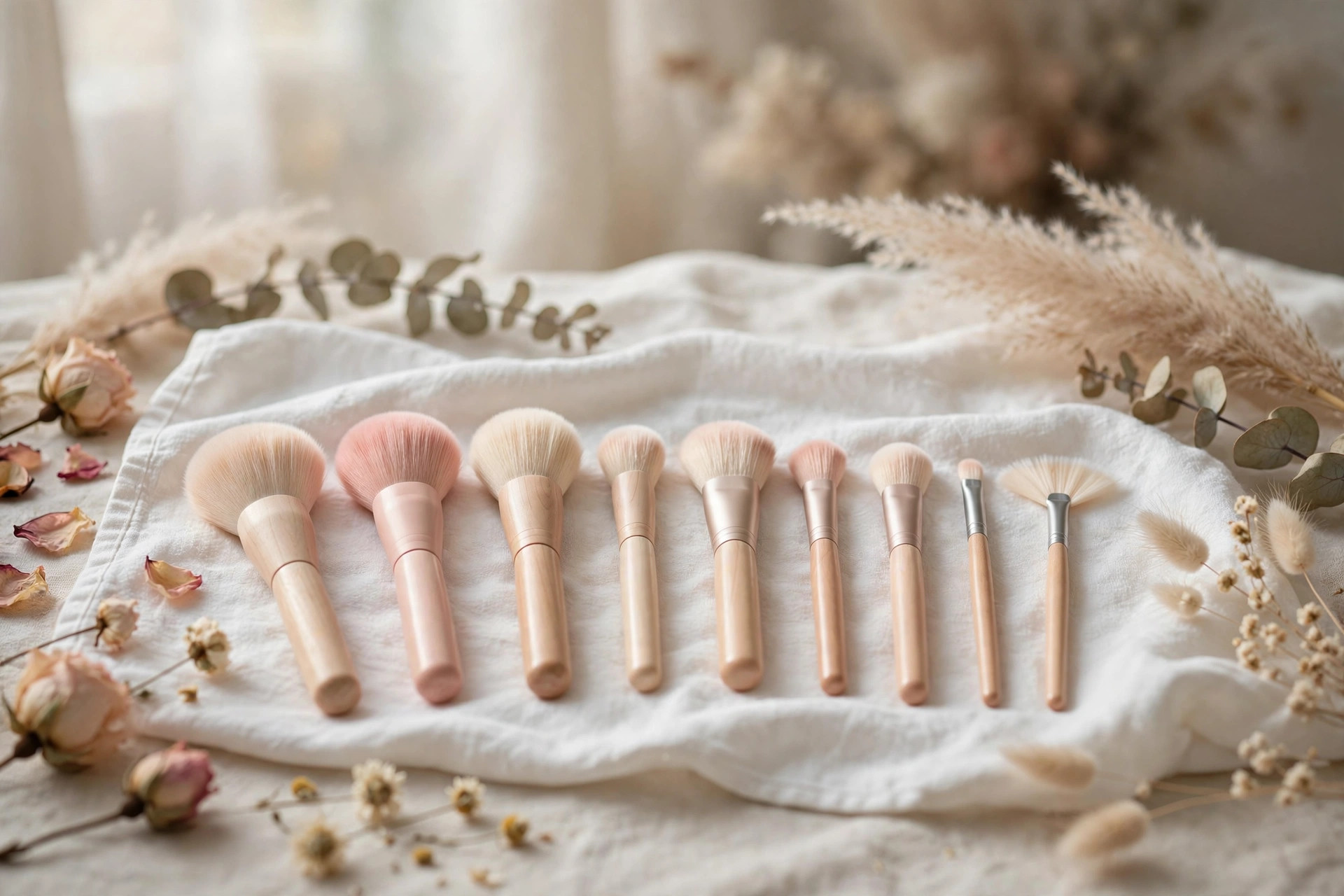
- Lay them flat on a clean towel with the bristles hanging slightly over the edge of a counter. This lets air circulate and keeps water from pooling in the ferrule.
- Never dry them upright (bristles up) while wet. Water runs down into the ferrule, loosens the glue, and your brush starts shedding within weeks.
- Never use heat — no hairdryers, no radiators. Heat warps bristles and melts the glue.
- Give them time. Dense brushes can take a full day to dry. Wash them in the evening so they’re ready by morning, or keep a backup set for wash days.
| Drying method | Verdict | Why |
|---|---|---|
| Flat on a towel, bristles over the edge | Best | Air circulates and water stays out of the ferrule |
| Fan pointed at the brushes | Good in a hurry | Speeds things up safely without heat damage |
| Upright in a cup, bristles up | Never | Water drains into the ferrule and loosens the glue |
| Hairdryer or radiator | Never | Heat warps bristles and melts the glue |
If you’re in a hurry, a fan pointed at the drying brushes speeds things up safely. But planning ahead is better — clean brushes the night before a day you don’t need them.
How Do You Keep Brushes Clean Between Washes?
Quick answer: A ten-second spritz of brush cleansing spray — or a quick swirl on a dry microfibre cloth — removes surface product between deep washes. It is especially handy for eyeshadow brushes when switching shades, so yesterday’s plum never haunts today’s neutral look.
For daily maintenance, a brush cleansing spray or a quick swirl on a dry microfibre cloth removes surface product between deep washes. This is especially useful for eyeshadow brushes when you’re switching colours — a quick cleanse prevents yesterday’s plum from haunting today’s neutral look.
Keep a small spray bottle of brush cleanser in your make-up area. A ten-second spritz-and-swirl after each use keeps brushes fresher for longer and makes the weekly deep wash much easier.
When Should You Replace Your Brushes?
Quick answer: Replace brushes when bristles shed constantly, the shape won’t bounce back after reshaping, natural bristles feel straw-like, or the ferrule turns wobbly. Sponges go when they tear, stop expanding fully, or smell off even after washing.

Even well-cared-for brushes don’t last forever. Replace them when:
- Bristles shed constantly, even after washing
- The brush has lost its shape and won’t bounce back after reshaping
- Natural bristles feel scratchy or straw-like (the protective coating is gone)
- The ferrule is loose or wobbly
- Sponges have tears, won’t expand fully, or smell off even after washing
Quality brushes, washed properly, last years. Cheap brushes washed properly last longer than expensive brushes that are never washed. The care matters more than the price tag.
How Do You Make Brush Washing a Habit?
Quick answer: Shrink the task: keep soap by the bathroom sink, wash your two or three most-used brushes while your evening skincare absorbs, and do the full collection every Sunday. Ten minutes for the daily brushes, twenty for the whole set — small enough to stick.
The reason most people don’t wash their brushes is that it feels like a project. Shrink it: keep your soap by the bathroom sink, wash your two or three most-used brushes while your evening skincare absorbs, and do the full collection on a schedule — Sunday evenings work well. Ten minutes for the daily-use brushes, twenty for the whole set.
Your skin will notice the difference. Cleaner brushes mean fewer breakouts, truer colours, and smoother application — it’s one of the highest-impact, lowest-cost upgrades in all of beauty.
Clean tools deserve a clean routine to go with them. Start your mornings right with this simple morning skincare routine, and keep your make-up flawless with this natural everyday foundation technique.
Wash your brushes tonight. Future-you — with clearer skin and better-blended blush — says thank you.
Leave a Reply