
Last updated: October 2026
Quick answer: Cycle syncing means matching your workouts to your menstrual cycle: rest and gentle movement during your period, building intensity in the follicular phase, enjoying peak energy around ovulation, and easing off in the luteal phase. It is a flexible framework for listening to your body, not medical advice.
Have you ever noticed that some weeks you feel strong, energised, and ready to take on a hard workout, while other weeks the thought of exercise makes you want to hide under a blanket? You are not lazy, and you are not inconsistent. If you menstruate, your energy naturally rises and falls across your cycle, and fighting that rhythm week after week is exhausting.
Cycle syncing is the idea of matching your workouts, and other parts of your life, to the phases of your menstrual cycle. Instead of forcing the same intense routine every day, you do more energetic movement when your energy is naturally higher and gentler movement when your body is asking for rest. More women are looking for fitness that works with their bodies instead of against them, and this approach offers a kinder starting point.
This is a gentle beginner’s guide, written in plain language. It is not medical advice, and it will not diagnose or fix anything. Think of it as an invitation to pay attention to your body and move in kinder ways. If you have a health condition, an irregular cycle, or any concerns, it is always wise to talk to a doctor or another qualified professional before changing your exercise routine.
What Does Cycle Syncing Actually Mean?
Cycle syncing means adjusting your movement to your cycle’s energy shifts: more energetic workouts when energy is naturally higher, gentler movement or rest when your body asks for it. It is a flexible framework for listening to your body, not a strict programme.
Your menstrual cycle is the roughly monthly rhythm your body follows, counted from the first day of one period to the first day of the next. For many people this is around 28 days, but a range of cycle lengths can be normal, and it can vary from month to month. Across the cycle, your hormone levels shift, and those shifts affect your energy, mood, strength, and how your body recovers from exercise.
Cycle syncing simply means noticing those shifts and adjusting your movement to match. On high-energy days, you might enjoy a challenging workout. On low-energy days, you might choose a walk, some stretching, or complete rest. That is really all there is to it. It is not a strict programme with rules you must obey. It is a framework for listening to your body.
It is worth being honest about the evidence here. The idea of cycle syncing is popular, and many women say it helps them feel better, but the scientific research on matching workouts to cycle phases is still limited and mixed. Some small studies suggest strength and performance can vary across the cycle, while others find little difference. What the approach offers, at minimum, is a structured way to pay attention to your body and give yourself permission to rest, which is valuable in itself.
The most important principle is this: your body on any given day matters more than what the calendar says. Cycle syncing is a guide, not a cage. If your plan says “rest day” but you feel full of energy, go and enjoy that energy. If it says “hard workout” but you feel awful, rest without guilt. You are the expert on how you feel.
What Are the Four Phases of the Cycle?
The cycle runs from the first day of one period to the first day of the next, typically around 28 days. Each phase — menstrual, follicular, ovulatory and luteal — brings a different energy pattern, and each suits a different style of movement.

To sync your workouts, it helps to understand the four phases of the cycle. You do not need a biology degree. Here is the simple version:
| Phase | Typical timing | Energy pattern | Movement that suits |
|---|---|---|---|
| Menstrual | Roughly days 1–5 | Energy often at its lowest; tiredness or cramps | Rest, slow walks, gentle yoga, stretching |
| Follicular | Roughly days 6–13 | Energy climbs; brighter, more motivated | Strength training, dance, cycling, new classes |
| Ovulatory | Roughly days 14–16 | Energy and confidence often peak | Harder workouts, intervals, group fitness |
| Luteal | Roughly days 17–28 | Gradual wind-down; lower energy before the period | Steady cardio, Pilates, then gentler movement |
These day ranges are averages, and your own pattern may look different. The NHS notes that cycles ranging from about 21 to 40 days can be normal. If you are on hormonal contraception, pregnant, breastfeeding, or perimenopausal, your hormonal rhythm will be different too, and the phase framework may not apply in the same way. When in doubt, a doctor can help you understand your own cycle.
How Should I Move During My Period?
During your period, rest is a valid choice and gentle movement is a bonus. Slow walks, restorative yoga, light stretching or swimming can ease discomfort, while high-intensity training and heavy lifting are best saved for higher-energy weeks.
During your period, give yourself full permission to do less. This is not the week to prove anything. If you feel like resting completely, rest completely. Lying on the sofa with a hot water bottle is a valid choice.
If you do want to move, keep it gentle and soothing:
- A slow walk in fresh air can ease cramps and lift a low mood.
- Gentle yoga — especially restorative poses like child’s pose, legs up the wall, or a supported forward fold — can feel wonderful.
- Light stretching on the living room floor counts.
- Swimming, if you are comfortable with it, is one many people find soothing for period discomfort, because the water supports your body.
What to skip: high-intensity interval training, heavy lifting, long hard runs, or anything that leaves you feeling drained rather than better. If a workout makes your cramps worse or leaves you exhausted for hours, it was too much for this phase. There is no prize for pushing through pain.
Practical tips for this phase: wear what is comfortable, keep a water bottle nearby, and eat enough. Your body is doing real work, and it needs fuel. Warm foods and drinks, like herbal tea or a cosy autumn soup, can feel especially comforting. Be as kind to yourself as you would be to a friend who was having a hard week.
What Workouts Suit the Follicular Phase?
As energy climbs after your period, rebuild gradually rather than leaping back in. Strength training, dance, cycling, jogging and new classes all suit this phase, and it is an ideal window for starting a consistent exercise habit.
As your period ends and energy returns, this is a lovely time to rebuild momentum. You do not need to leap straight back into intense training. Think of it as a ramp, not a cliff. Start moderate and build across the phase.
Good choices for the follicular phase include strength training with light to moderate weights, dance classes, cycling, jogging, hiking, and trying any new workout you have been curious about. Many people find their motivation and coordination are good here, which makes it an ideal time to learn new skills, whether that is a new yoga flow, a boxing class, or a different route for your run.
This is also a good phase for setting intentions. If you want to build a consistent exercise habit, the rising energy of the follicular phase makes starting feel easier. Sign up for the class. Lay out your workout clothes. Tell a friend your plan. Use the natural motivation while it is here. As a general benchmark, the CDC recommends adults get at least 150 minutes of moderate-intensity aerobic activity per week, alongside muscle-strengthening activities — a target you can build toward gradually across this phase.
Aim for a mix across the week: a couple of strength or cardio sessions, a walk or two, and at least one proper rest day. Even in a high-energy phase, rest days matter. Your body gets stronger during recovery, not during the workout itself.
How Can I Use My Peak Energy Around Ovulation?
Around ovulation many people feel their physical peak, making it the natural window for harder workouts like intervals, challenging strength sessions or group classes. Warm up well, use good form, and remember the calendar suggests while your body decides.
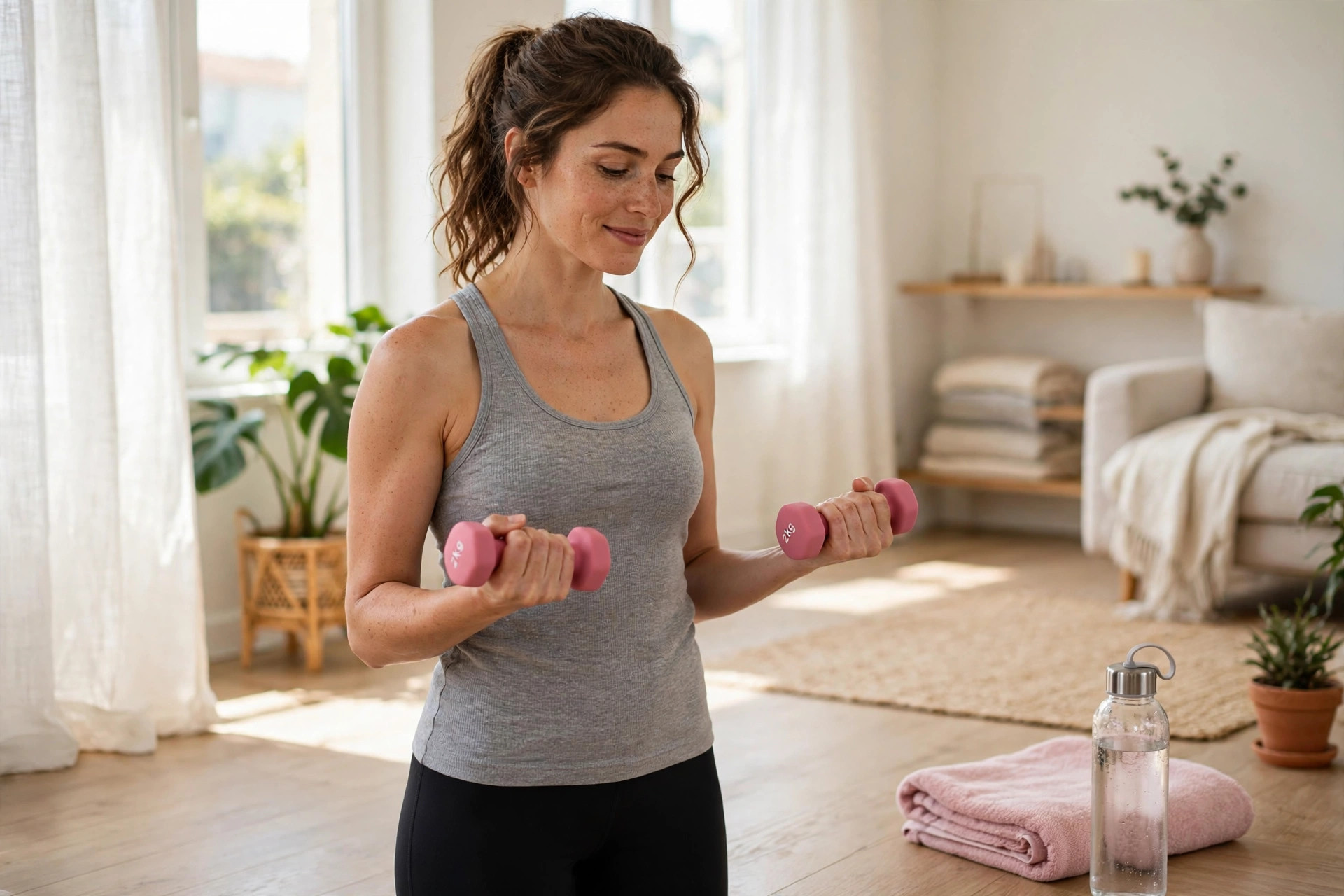
Around ovulation, many people feel their physical peak. If you are going to do your hardest workouts of the month, this is the natural window for them. Enjoy it, but do not feel you must max out every session. Feeling good is the point, not punishing yourself.
This phase suits higher-intensity movement: interval training, challenging strength sessions, group fitness classes, team sports, or a long hike or run if that is your thing. Many people also feel more social around ovulation, so it is a great time for workout dates with friends, trying a class you have been nervous about, or joining a local running club.
One caution: some research suggests joints may be slightly looser around ovulation, which could mean a slightly higher risk of strains if you push very hard with poor form. This is not a reason to be afraid of exercise. It is just a reminder to warm up properly, use good form, and not attempt a personal best on a movement you have never tried before. Warm up for at least five to ten minutes, and cool down afterwards.
Listen to your body even here. “Peak energy phase” is an average, not a promise. If you feel flat during ovulation, that is fine too. Stress, poor sleep, and life in general affect energy far more than hormones alone. The calendar suggests. Your body decides.
How Should I Exercise in the Luteal Phase?
The luteal phase asks for flexibility: steady moderate movement early on, gentler walks and yoga as energy dips before your period. Plan for the dip instead of fighting it, and be extra kind to yourself if premenstrual symptoms show up.
The luteal phase is the long wind-down, and it asks for flexibility. In the first half, you may still feel quite strong, and moderate workouts can feel great. In the second half, the premenstrual days, energy often dips, and this is when many people abandon their routines entirely because they cannot face the workout they planned.
The cycle-syncing answer is to plan for the dip instead of fighting it:
- Early luteal phase: enjoy steady-state cardio like brisk walking, swimming or cycling, moderate strength training, Pilates, and longer yoga sessions.
- Late luteal phase: shift down to walks, gentle yoga, stretching, and rest days. If premenstrual symptoms like bloating, breast tenderness, headaches, or low mood show up, be extra gentle with yourself.
This is also the phase where self-compassion matters most. Many people feel frustrated with their bodies in the days before their period. Remind yourself that the dip is temporary and hormonal, not a character flaw. Moving gently, even for ten minutes, can genuinely help mood and physical symptoms, but only if it feels kind. A walk you enjoy beats a workout you dread.
Sleep and food matter more than usual here too. You may feel hungrier in the luteal phase, and that is normal. Eat nourishing food without guilt. And protect your sleep, because poor sleep makes every premenstrual symptom worse. Our article on sleeping better when the nights get longer has practical ideas for the autumn months.
How Do I Start Cycle Syncing This Month?
Starting is simple: spend a month or two just observing your cycle and energy, then plan loosely around your own pattern. Keep it flexible, adapt to real life, and see a doctor if periods are very painful, heavy or irregular.
Starting is simpler than it sounds. You do not need a special app, although several free period trackers can help you learn your pattern:
- Observe first. For the first month or two, just observe. Note the first day of your period, jot down how your energy feels every few days, and notice what kinds of movement appeal to you. A simple note on your phone is enough.
- Find your pattern. After a month or two of observing, you will start to see your own pattern, which may or may not match the textbook phases. That is fine. Your pattern is the one that matters.
- Plan loosely. Start planning around your pattern: harder workouts in your high-energy window, gentler movement in your low-energy window, and rest whenever you need it. Keep it flexible — life does not organise itself around your cycle.
- Know the boundary. Cycle syncing is a wellness approach, not a medical one. It cannot diagnose hormonal problems, fix irregular periods, or treat conditions like endometriosis, PCOS, or PMDD. If your periods are very painful, very heavy, very irregular, or affecting your daily life, please see a doctor. You deserve real answers, not just a workout plan.
Why Move With Your Body, Not Against It?
The real gift of cycle syncing is permission: to rest without guilt on low-energy days, to go hard when you feel strong, and to stop treating your body like a machine that performs identically every day of the month.
The real gift of cycle syncing is not a perfectly optimised training plan. It is permission. Permission to rest without guilt on low-energy days. Permission to go hard when you feel strong. Permission to stop treating your body like a machine that should perform identically every day of the month.
Start small. Observe for a month. Adjust one or two workouts. Notice how it feels. Over time, you may find that moving with your cycle does not just change your workouts. It changes your relationship with your body, from adversarial to collaborative. And that is worth more than any personal best.
For more gentle ways to support your body through the seasons, our immune-boosting habits for fall guide pairs well with a kinder approach to movement.
Leave a Reply